

Drinking wine can be pure joy, however tasting wine, with focus and intent, can take you on a full-fledged multisensory and intellectual journey. Collecting information through the senses, from the appearance, the aromas on the nose, and the flavors and structure detected on the palate, can help decipher what the wine is and assess the wine quality.
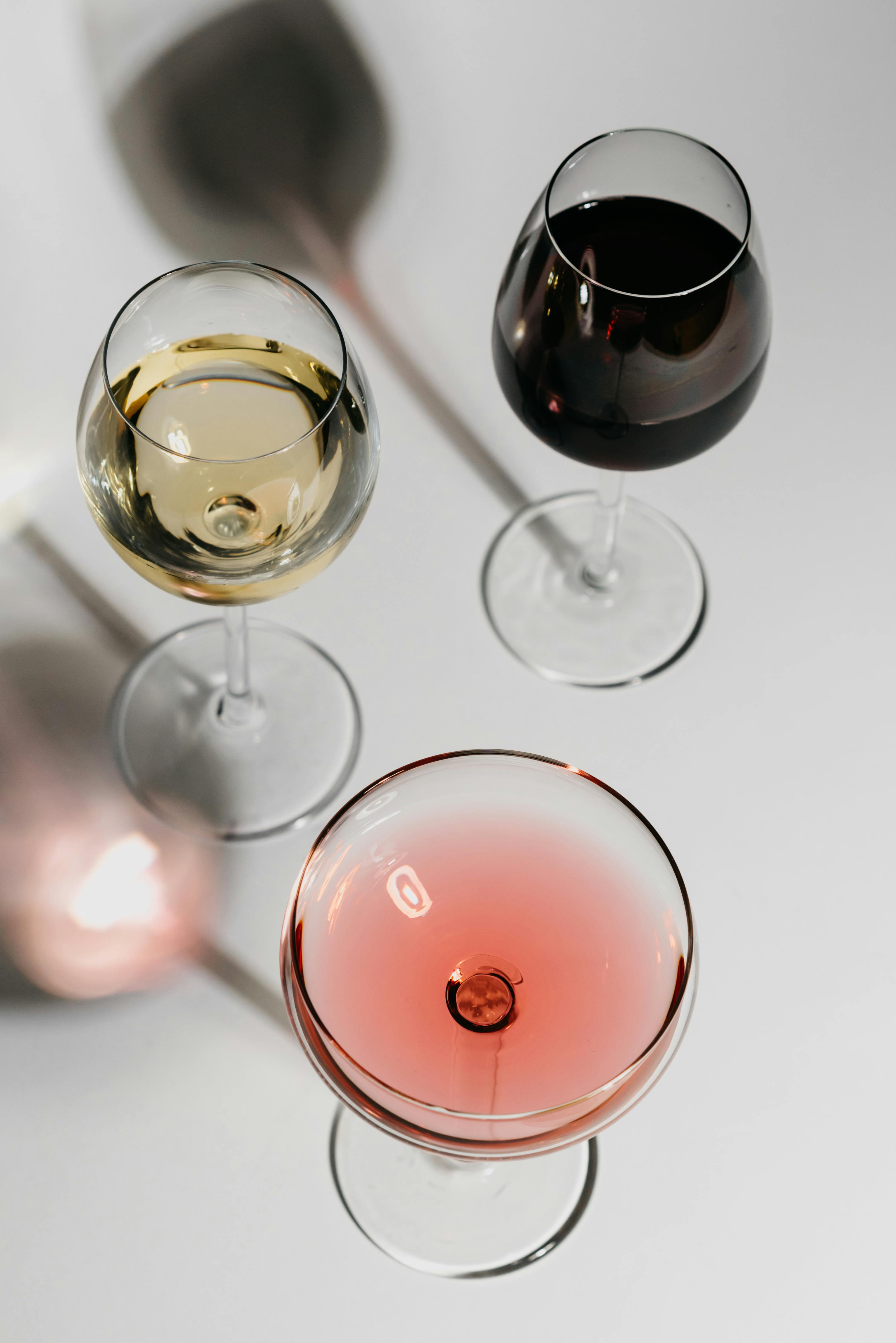
Judging the wine visually is the first step in wine evaluation in any professional tasting. In the Systematic Approach to Tasting Wine (SAT) developed by WSET (Wine & Spirit Education Trust), one starts the wine assessment by checking the appearance (the color and its intensity) by looking down at the wine in an inclined glass against a white surface.
The color of white wine can be lemon- green, lemon, gold, amber, tawny, or brown. Red wine can be purple, ruby, garnet, or brown, while rosé wine can be pink, salmon, or orange.
The intensity (or amount you are able to ‘see through’ the wine) can be pale, medium or deep.
Color in wine comes from a pigment found in the grape skin called “anthocyanin” which is the same compound present in other fruits and flowers with red, blue or purple colors.
During the initial stage of red winemaking, the grapes are crushed, and the juice and skin are left in contact with each other (macerating or soaking). Tannins and color will be naturally and actively extracted from the skin into the fermenting juice. Generally, the more soaking time and rigorous extraction, the deeper the color. It’s important to note that having a short duration of skin contact with the juice will result in rosé wines where only a hint of the color seeps into the juice. The longer the skin macerates in the juice, the darker the shade of pink.
The grape variety factor
The intensity of color can also be directly related to the thickness of the crushed grape skin along with the management of this extraction (strength, frequency and temperature). Thin skinned varieties like Pinot Noir for example naturally have less color so produce paler colored wines while thick skinned grapes like Cabernet Sauvignon are more densely pigmented and typically produce deeply colored wines.
 thewineofthings.com